When Chinese Ink Meets Western Art
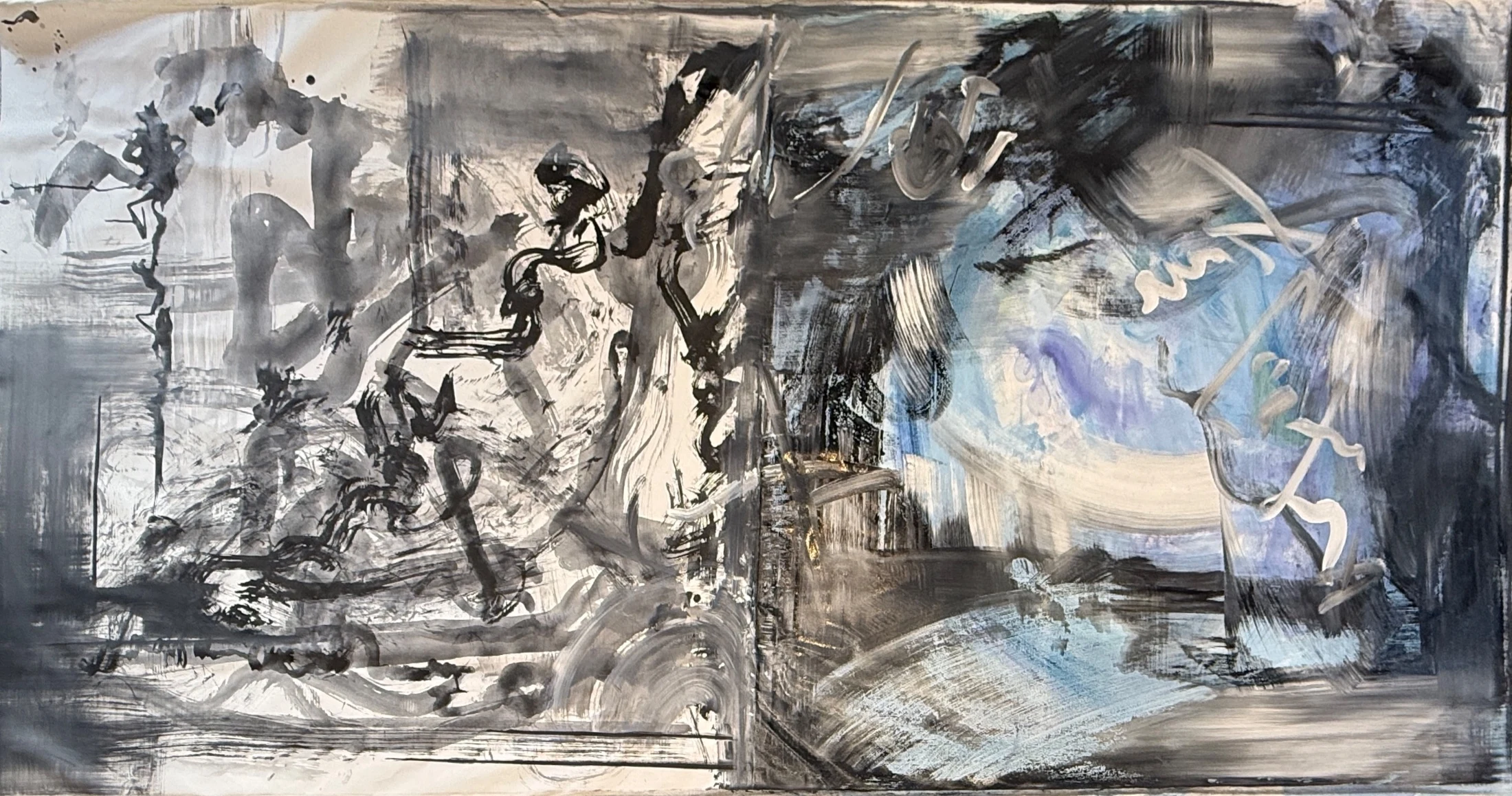
When Chinese Ink Meets Western Art
There’s something captivating about a painting that seems to hold two worlds at once: the quiet openness of Chinese ink painting and the bold structure of Western drawing. One invites you to slow down and notice what is left unpainted; the other often draws you in with perspective, carefully observed forms, and a strong sense of light and shadow. Together, they can make art that feels both spacious and vividly present.
A conversation between brush and pencil
Traditional Chinese ink painting often values expressive brushwork, rhythm, and the energy of a single line. A mountain might be suggested with a few strokes, while mist or water appears through the untouched paper. The empty space isn’t a gap to fill. It’s part of the composition, giving the image room to breathe.
Western drawing traditions often approach a subject differently. Artists may build form through perspective, anatomy, shading, and close observation. Light and shadow give a figure weight; perspective can make a landscape feel as though it stretches far beyond the page.
When these approaches meet, they don’t have to compete. A detailed Western-style figure might stand within a loose ink landscape. Or a traditionally brushed scene might use Western perspective to guide the viewer’s eye into the distance. The result can combine the suggestion of ink with the solidity of drawing.
Let contrast do the work
The most interesting combinations often preserve the differences between the two styles. Try pairing a precise, shaded object with broad, fluid washes. Let a carefully rendered face emerge from a background of expressive marks. Or use a strong vanishing point, then soften the surrounding architecture with ink that fades into the paper.
That contrast gives each technique a job. Line and shading can anchor the subject, while wash and open space create mood. Instead of blending everything into one uniform look, allow the image to shift between definition and suggestion.
Start with a simple experiment
Choose one subject—a tree, a teacup, or a small corner of a room—and draw it twice: once with attention to realistic form, then again using only a few expressive brushstrokes. Finally, combine the two versions. Keep the details that bring the subject to life, and leave some areas open so the eye can complete the scene.
There’s no single formula for mixing Chinese ink and Western drawing. The pleasure is in the exchange: precision meeting spontaneity, structure meeting space, and observation meeting imagination. When the balance feels right, the picture doesn’t merely show a subject—it gives it room to breathe.